Pages

Wednesday, 11 May 2022

Running a Training Course

 When sharing with staff, or other teachers there are many ways to support them. Here are a few.


PLD can be done in so many ways we often forget about the inconsequential meetings and quick tips we pass on. They all count. This year we had an acting principal for a term before our new principal started and both had questions that needed answering even though they are on very different ends of the digital fluency scale. 

There is no one size fits all, and now I go in prepared to help the person take notes checking over them ( as the order could be very different and then they give up, don't ask for help as they believe you didn't tell them. if they don't need the notes version all good.

Even seasoned professionals need reminders now and again. I often hear what do you mean I can unsend...

Talk Moves -

After using rich maths activities and starting the talk, now we need to learn to dig deeper and get students to say what they see. As 


Having looked at a couple of my Class OnAir Videos, I realise that the more talk the students do the more they learn. So to me this is very important part of the lesson.


This is an important idea to grasp, as we want students to learn and remember new concepts so we need to give them opportunities to discuss, experience and teach others.

To Help Students with discussions here are some easy phrases to encourage more talk include:

  • "What else?"
  • "Tell me more..."
  • "And.."
I look forward to working out more phrases to encourage discussion and to encourage to student to think deeper.

Although this was brought to my attention again through Math PD it is true in all areas of learning.

Thursday, 5 May 2022

Blogging for Students

 Malo le lei

This week my focus for Class on Air was getting students to share their learning on their new blog in Edublog. Although this was done earlier in the term we revisited it due to students returning after covid isolation periods. Click on the images to learn more.


We talked about the purpose of sharing our work, who wants to see it and why.


Friday, 29 April 2022

Enrich Maths - Decimals

 Talofa

This week's session for Class on Air was in Maths, one of my favourite subjects. The fact we can give students real-world problems and then dive into the patterns and understanding behind in through maths is inspiring and a lot of fun. Click on either image to find out more.


Thursday, 28 April 2022

Hapara Champ - Teacher Dashboard

 This week in Hapara Champion we are learning about the Teacher Dashboard. 

I find the Teacher Dashboard really helpful and have for a few years. Your administrator creates folders for students to file and keep work is extremely useful. At Wesley Intermediate students have a folder for each core curriculum subject, PB4L, Cybersmart and Other. 

From Teacher Dashboard the teacher can see if students have created and named the task and added it to the correct folder. The teacher can hover over a student's work and then open it to add feedback instantly.

Teachers can group students for core subjects helping them to view a particular selection of work at a time. 


On the left, you can see the work a student is working on and by hovering the pop up opens to see how they are going. You can click here or on the name of the work to open it. 
The top right is the group's tab (on the right of the screen in Hapara. by selecting a box that will be the students you will be able to view. If you wish to change the order of students the Sort tab gives you options.

However, if students forget to file work you can still access through the sharing tab on the left and pick all documents or unshared.

Teacher Dashboard has other great features too, such as the ability to send messages to students individually or collectively.  And you have the ability to share resources or work and put it in student files.


Wednesday, 20 April 2022

Hapara Champ - Highlights

Okay, so I have decided to try adding more to my list of things to achieve this year (not like teachers don't have enough). 

I have used Hapara for around 5 years. It is interesting how it has grown, and I didn't really notice all the new developments as they came about. Doing this course, Hapara Champion has drawn my attention to them. 

After completing the Digital Fluency Intensive course (DFI) in 2018, I knew more about Hapara. However, I didn't understand that Hapara was created in New Zealand, with New Zealand schools in mind. 


This week is about getting started in Hapara. 

Highlights

As part of the Hapara platform, I have enjoyed using it for checking in on students and ensuring they are doing the right thing at the right time. This can be done through Highlights.

Through highlights teachers can:
  • Browser Tabs - this shows the pages students have open and what they are working on
  • Current Screen - shows an image of the screen students are working on (slightly delayed)
  • Snaps - takes a photo of what students are doing (evidence of being in right place and at the right time)
  • Schedule - you can schedule times when students have access to particular sites or not
These 4 are all located on the left of the screen in highlights.

On the right of the screen, there are more useful tools which include:
  • Groups - this is great for sorting students, whether it be for a subject or table groups
  • Sort - this lets the teacher sort the tiles of students; by first name or last name and A to Z
  • 5 items - this allows you to change the number of items you are viewing
The part in Highlights I have learnt about doing this course is Activity Viewer. There are 3 sections in the Activity View; Class Activity, Unique Activity and Collaboration. You can view who has been on which google app or which sites, indicating who is on task and who may need more assistance and who has been working together. 

My favourite feature is the message button. You can send a message to a particular student, group of students or an individual student. This way we can encourage them, redirect them to a specific site or send them a reminder to return to the task.

Through Highlights, you can share links to help students get started on a new piece of learning. Use Guide Browsing to help direct students to specific sites (focus session) or filter out sites (filter session). You can use these functions to include up to 10 different links.

I am going to try to use the Activity view more to see who needs help more quickly.

Saturday, 9 April 2022

PB4L - Expectations

 Positive Behaviour for Learning

This year we have been revisiting PB4L. Which is great as even though I have completed the 10 week course Incredible Years (IY). I know we need to teach student how to behave in order to learn, I have never been coached in this aspect using this specific pedagogy. 

We have looked at the data where interventions have had to come into play through the week and Monday is our worst day. There are many positive reasons for this but if we have a relationship with the students and their whanau we have a chance to help direct students to be ready for learning.


So the first thing we created with the class was a rubric on class expectations. Which we broke down with the school expectation Respect Yourself, Respect Others, and Respect the Environment and then into section of when expected behaviours were expected. This is co-constructed with the students.


3P's: Prompt, Pause and Praise are 3 ways I reinforce expectations and learning regularly. 

But there are others to build relationship I want to consider 

  • 10x2 - 10 opportunities for 2 minutes to sit with a student and talk with them to get to know them more in-depth.
  • Making Connections - using different greetings with (poster)
  • Referring back to the Class Expectations regularly to reinforce what I want to see and to happen
  • Build in more fun activities - that will energise not just the students but you too.
 

Things I do and will continue to do:
  • Ring parents for positive things, not just behaviour. And start this early in the year, making an effort to find the positive during the honeymoon period each term.

Friday, 8 April 2022

Using Dialogue

 Welcome,

My second session with Class on Air for Term 1 is about using dialogue in writing to help students grab the reader's attention. What I like about using dialogue is that we need to create paragraphs each time a new person speaks and we can use a range of punctuation. Click on either image to learn more.


What I like about using these slides is that students can see dialogue broken down and have the opportunity to create dialogue multiple times.

Thursday, 31 March 2022

Reciprocal Reading

 Hello, 

This year I am part of the Class on Air Team for Manaiakalani.

My first Session is on Reciprocal Reading. I enjoy using this process for reading as students learn to dig deeper themselves regardless of what type of text they are reading. Click on an image to learn more.

In Reflection: I would like to have students taking more initiative to help drive the discussion about the learning. It was great to hear students reading aloud fluently. I can see I need to give more opportunities for students to run the reciprocal reading process.

Wednesday, 23 March 2022

Productive Struggle

 Reflection on Co-teaching in Maths

What will you take away from the co-teaching?

        How do we know it is half e.g. 9+9=18 - numbers are the same
        Think about the answers/anticipate student responses, to be mindful of misconceptions and what will         help direct and redirect students.
        Continue to pitch at level 4/5 and put in place just in time workshops.

What will you do differently next time?


Thinking from the beginning of the year:
  • high expectations teaching
  • acceleration vs remediation = planning, how can we make this less not more.
  • key role of formative assessment - this leads to productive struggle!
Unproductive Struggle - weight lifting - too heavy or not heavy enough 
Spotter - assess the struggle, and have their back if it is too much of a struggle for them


Productive Struggle is better than unproductive and looped with feedback gives us results.


Discuss and model with students - How to work in a group, helping students to get results with their learning. 
Click on the image to see more.

Something to remember is - 
Better than formative assessment is monitoring feedback and scaffolding - Dylan William

What I want to know is how to get the discussion going to help students develop understanding rather than just telling the answer or what to think!


Friday, 4 February 2022

Grow our Math Brain

 To help grow our brains, we need to be asking questions and use productive struggle.


What do you notice? What do you wonder? 


These two questions are a great place to start and as students answer, ask what else soliciting other answers from other students. 


3 Act Task such as a Video, create a provocation, giving students the chance to notice to wonder even question.

Progress Tools Ministry have created to help the Learning Progression. or the PaCT - Progress and Consistency Tool.

There are 8 Aspects of the Maths Framework:

  1. Additive Thinking
  2. Multiplicative Thinking
  3. Patterns and Relationships
  4. Using symbols and expressions to think mathematically
  5. Geometric Thinking
  6. Measurement Sense
  7. Statistical Investigations
  8. Interpreting Statistical and Chance Situations


The Framework clarifies expectations in Mathematics to help stop negative talk. I can't do it Yet! Using complex problems we are encouraging students to take risks.


The Reader and Writer who is struggling, we look at the student not just what they produce to help them accelerate. So we need to know how a mathematician operates.


Thursday, 27 January 2022

Maths Mahi and Expectations

Increasing Acceleration in Maths

High expectations are essential in all learning areas, as students need to be involved in the tasks to find success. Games and hands-on investigations can help to achieve this. Students are often unable to see the purpose or relevance to their daily lives to work in textbooks. 

The focus is not on remediation, informing students they are behind. The focus is on acceleration. Skills that are needed are taught using a just in time strategy, then utilised straight away, giving students a sense of power. The tasks are constantly relevant and inspire students to engage. The pace of learning is maintained and students feel they are part of the core class not lagging behind.


As a group, we all had 10 seconds to look at this image and then describe what we saw.


Initially, teachers were reluctant to share their ideas. Sound familiar? All ideas were accepted with no judgement, just the question 'What else?'

Ways we can ignite curiosity with Maths:

  • Photos, images, posters
  • Saying, Riddles
  • Meme
  • Video
  • Guest Speaker
  • Article
  • Facebook Post

These two images created a lot of discussion in my class the first was an introduction to decimals and what was wrong with the sign. The second was used to introduce fractions before heading into decimals.

Acceleration Framework

  1. Generate Thinking
  2. Clearly Articulate learning and expectations
  3. Scaffold, practise skills
  4. Introduce vocabulary, and review Prior knowledge
  5. Dip into new concepts
  6. Conduct Formative Assessment
To help with Vocab use a Tip Chart (Term Information Picture) best when student-driven.

We need to change the disposition of teachers and students towards maths before attainment will change.

Thursday, 4 November 2021

Teacher Tool Kits Term 4

 Another two excellent toolkits I attended this week. 

SketchUp

The first one is about SKETCHUP - a dimensional site that helps you create just about anything in 3D with the ability to view from all sides. We logged in using our google accounts. Take measurements, add sides, create poles, supports, patterns to help make it more realistic. We had the opportunity to make a matchbox. Mine ended up being a giant matchbox.


Once I finished creating my matchbox, I used their viewing tool to look at the object from different angles and rotate it to a new view.

Google Sites - Updates

Google Sites has so many exciting new features. I can't wait to create next year's site to try them out.


I am looking forward to creating my own template using specific colours. The layout options are useful to help prepare pages for upcoming content and quick editing maintaining size and shape.

Friday, 29 October 2021

Wananga - Manaiakalani


Discussion Time:

  • What is likely to work?
  • What is actually working?
  • Data is this what I see in my class?
  • Why is this data bringing this up?
  • Why does this surprise me?
If we can change the prophecy we can change the fulfilment.


Characteristics of a Expert Teachers - John Hattie

It is important to strike that balance between surface and deep learning. Much of what teachers do is surface and this often leads to the mundane. - We as professionals need to reflect on this.


 Designing Learning with the End in Mind


As professionals we need to be intentional, relational creating discussions that give students the opportunity to share ideas and dig deeper. Which leads to Planning with Intent!


For T-Shaped to be successful, texts have to be deliberately chosen not a hodgepodge vague collection.
It is often through Matariki Time we see cultural representation, there are other opportunities too. Need to find them.


What are these:

Mirrors - finding / seeing / self in the worth of the text 
Windows - looking out / finding new possibilities from in the text 
Glass Sliding Door - imaginative / of a different world / world of different experiences


Social Emotional Learning

Build vocabulary so all students have access.
Keep improving extended discussion through questioning and prompts for student discussion.

If we only focus on literal (Who, What, Where) we are not giving students the opportunities to practise higher order thinking skills. We need to plan for these or they are forgotten. Even Slow Readers need to have access to this learning, not an excuse but they didn't get to them. 

WE NEED TO TEACH EVERYONE TO DISCUSS AND LISTEN AND CRITIQUE.


Critical Literacy in Observations

Needs to be intentional, planned, discuss the authors reason for writing.
We build understanding and knowledge by contributing to discussions.

Why create = engagement and leads to transference of strategies.
E.g Metaphor - learn about it in reading using it in create a piece of writing.

Sharing is not often visible, only half include reflection from students about their work.

Reading programmes- Think about how they are helping teachers become the experts not the students. 
Deliberate Acts of Teaching = biggest shifts

Expert teachers help students become reflective and self assessing 


Thursday, 14 October 2021

Working Towards Google Trainer

 How reassuring the Facilitators have been, they are making it sound easy not so daunting as it was when I read the what to do.
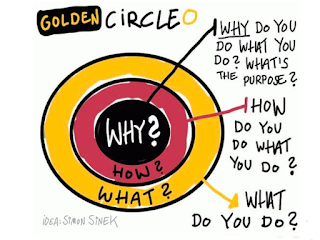
Facilitators - Be the Change

We need to inspire, create and sustain change in our school.

From Professional Development we have done the positive include hands-on, practical for us as teacher or in the classroom.  Negatives are when PD is rushed, lacks preparation and little or no opportunities for talking.

  • Professional Development need to be relevant and fun
  • We need to meet people at their level in order to empower them whether it is the student or the teacher
  • Development with Teachers not just for Teachers
Main barriers to change include time, infrastructure and reluctant teachers.
        Reluctant Teachers     - need little pressure and lots of support
                                             -  streamline their workflow
                                               - be positive, support, answer questions (even the dumb ones)
                                                 - give time to try and listen
                                                   - use students to teach teachers
                                                     - link to passion, grab what they are interested in.


For Change to be effective:

  • Leadership need to be on board
  • Know the Teacher = trust
  • Small wins
  • Find build tribe to help support
  • Identify barriers and solutions
  • Lead by example
  • Share it out
  • Just keep swimming
What do you find frustrating? Let's see if we can make it easier.

Post Grad: Session 9 - Innvations

 Being Innovative and Reflective Whakataukī He toi whakairo, he mana tangata Where there is creative expression, there is human dignity. How...