Pages

Showing posts with label Manaiakalani Innovative Teaching. Show all posts

Friday, 22 March 2024

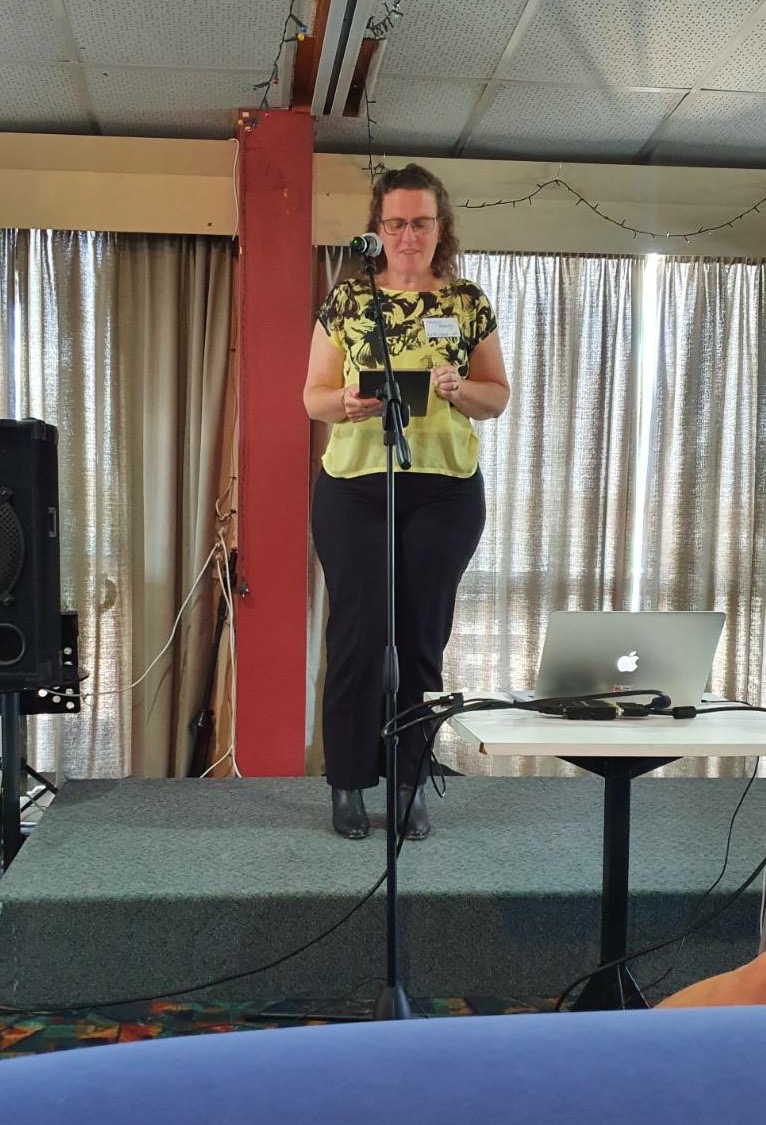
MIT - Alumi Christchurch

 Kia Ora Koutou

Today we caught up with faces we have seen in a few years for some of us, other faces we have seen through toolkits, facilitation and Class on Air.

Dorothy talked about how the MIT program has evolved over the years and how it developed using Design Thinking Tools. Which helps us as teachers to be inquiry-focused in our Practice.


After a quick update on where and how previous members are doing we moved into our purpose for the day. And how our projects have helped accelerate learning in a digital world.


As technology continues to develop how can we utilise it to accelerate learning and create Maximum Impact?


For those new to the process, we quickly revisited Design Thinking.

To be our most successful team we had to have a passion for the problem. I am currently doing Reading Practice Intensive and am applying what I am learning to my Maths program. Kiri is part of the team leading the MPI.

The Essence of a Design Sprint:

A Design Sprint is an intensive workshop that applies Design Thinking principles to swiftly tackle and brainstorm solutions for specific challenges. It streamlines the ideation process, allowing for quick generation and refinement of ideas. While it doesn't encompass the full breadth of Design Thinking, it serves as a powerful tool for rapid innovation within limited timeframes.


We were given teams and four problems we could Ideate on.

Kiri and I picked the Maths Programme Design (aligning it with MPI).


The issues, we identified that need to be covered in a Maths Program are shown below.


As I have mentioned in an earlier post I have already been thinking about a Maths task board so this will help solidify the ideas that need to be included in it. There appear to be several things I have yet to consider.

Of course, we had to put this into a point of view and a How might We?


Our ideas for solutions...

So watch this space to see what happens.


Wednesday, 13 July 2022

Inferring Mood in Reading

 Through a research programme with Manaiakalani Year 7 and 8 classes, I am developing my understanding of teaching critical literacy skills for reading that can be used in writing. In this episode of Class OnAir, I am looking at how students can identify the mood in a story through inferring. As adults, we know we use clues from images, words and how people and situations are portrayed to us.

Just before this lesson, I was teaching students how to identify mood in their reading, using nouns and verbs to make connections. I was reminded this is called inference. When I mentioned inferring and guessing using keywords from the text, the light bulbs exploded. Check out the link to Inferring the Mood through Class onAir.


Tuesday, 14 September 2021

What is a Whakatauki? A Proverb

After looking at how to make our writing more interesting using idioms we started to look at other sayings that are based on experience and truth. Wise words people like to share and live by. So I create a couple of activities to help students understand what they are and their meanings. Followed by how they can be used which is often in speech as that is how people share them.

Here is an example of what is included in the slides. Then as we were online learning due to the pandemic I was encouraged to make an early bird activity that involved a scavenger hunt. Next came Te Wiki o te Reo Maori (Maori Language Week) and I enjoy learning different Whakatauki (Maori Proverbs), and we are now scavenging for the meaning of Maori Proverbs.

Saturday, 28 August 2021

Adding to the site Creating Writers

Here we go again... Lockdown 2021 August

Teaching always has challenges. This is especially so in a new school. This time allowed me to get to know the community differently. Yes, from a distance. 

It even provided the opportunity to add to my site Creating Writers. (Click image below to visit) 

One of the teachers at school was encouraging students to use and understand idioms, which I really enjoy due to their playful nature with words. That set me to thinking why are there no activities for students on the site for this to help hold the reader's attention?

Thinking about I get it, in New Zealand we teach a range of cultures with a range of languages and the ability to understand English, so as I always do I  explain what an idiom is. The great thing is they are used in all languages, but the slides focus on idioms used in English. 

Here are the new activities I have added and modified to create a follow on. 


Each set of slides uses a different range of idioms and explains a range of idioms we often use in everyday life without thinking about them.


I even had time to make a second simile set. 


Hope you enjoy using them as much as I enjoy making them.


Friday, 30 July 2021

MIT - Workshops in the Cook Islands

We were to offer workshops that were unrelated to our presentations as a thank you to the staff of the school hosting us.  I planned and took with me 3 Spheros (robotic balls) and two i-pads, so the teachers could work with the Spheros. I thought it was a great idea, even if the internet didn't work as they worked with a Bluetooth connection.

Welcome

Our day started beautifully with a traditional welcome and dancing. The students performed wonderfully, the drummers an intricate part.


Workshops

When we landed we found out they had organised for us to do workshops with them. So we made a sarong or as they called a 'pareu'. We printed the sarong using fabric paint, a roller and a large white piece of material laid over the board. The plywood was layered with patterns that could be printed. 


The next workshop was coconut husking and peeling to get the coconut and juice out for dinner. Demonstrated to us by a group of boys who were patient and encouraging.


The third workshop was weaving. 

This one I was really interested in as I enjoy weaving with flax, this time I learnt to weave with the leaf of a coconut tree. First, we were encouraged to weave our plate for tomorrows umu. There were students weaving the base and top for the umu basket, bowls and baskets for the food to be put in to cook. After completing my plate I have to try weaving a bowl, it was great fun.


It was then back to the resort for a cool swim, relaxing in the air conditioning or a mocktail poolside before a quick practise for the main event. The presentations.

Monday, 19 July 2021

MIT - Preparing to Share in the Cook Islands

In a few weeks, I am heading to Rarotonga to share my presentation and learning from 2020. Having recently changed school I feel like I am drowning, but I want to do this I love what I created with my learning site and what to share with the world.


Of course, there were some criteria that need to be fulfilled. 

1. Working in a Manaiakalani Outreach School

2. Keeping my site and posts up to date

3. Permission from the Principal and School (In the case of in-school PD, ours was the first week of the holidays.)

4. Can't forget a current passport

5. Update presentation

Tick, will be a tick soon, Tick, Tick and that should be easy.

I just forgot about how much time a new class takes and missed a couple of emails. So I updated the site with Similes and Storyboards, which I had been working on to help students create more ideas and keep them in order. The blog posts with examples of storyboards and a post about the new features on the site.  Tick!

Just to organise my presentation. Then pack a bag, what do I take?

Looking through my presentation there were only a few changes I needed to make, as the results were still relevant, the purpose and reasoning behind my idea were still solid. Updating what I still hoped to achieve with the site and altering some of the features that were no longer available such as google expeditions is now google cardboard. And of course, organising my google cardboard to take with me to show the teachers. Now to find time to practise my speech for the presentation. And learn some local phrases.

Friday, 2 July 2021

Using Storyboards with Room 9 at WI

 Changing schools is a big enough challenge especially trying to slip into teaching their already planned inquiries. However, with the study of war, it opened right up to using storyboards. 

Students were asked to write about the day in the life of a soldier. They had watched many clips from youtube about a range of sides from WW1. Here are some of the storyboards they came up with and part of their stories.


Storyboard 1 - The Soldier Sleep in the damp, wet environment, with bombs raining along the borders of foreign lands. The flock of men, scared to death as explosions run at them. The crisp cold morning air fogging the view of our enemies. The filthy trench boards creaking foot by foot. Mud smothering each man in a thick brown coat of dirt. Rats make their home in your ditch, feasting on your fellow buddies. Soldiers on the bare minimum of sleep.


Puff, your Captain prepares to announce the time to charge. He presents his supposed final speech as returning is unlikely. "Men of Britain may the best of luck be brought upon us soldiers."

The whistle blows, MEN SCRAMBLE OVER THE TRENCH & SHOW NO MERCY!


Storyboard 2 The soldiers awoke at 6:30 am being grateful that they were still alive. They gathered all their gear and left for their areas. Pushing past each other, shoving and having a joke trying to get their minds of where they were for a moment, boots soaking wet and uniforms covered in mud. 

Waiting in silence for a gunshot. Looking left and right, waiting for the orders to 'fire'. Silence in the air for 2 hours, when finally the order came. "Fire!" the Commander shouted across the trenches.

Heavy thumps hitting the ground, bullets flying through the air, body parts splitting the trench walls. The soldiers were once again at war. Smoke in the air and bullets on the ground. 
 

Storyboard 3 - Soldiers wake up for their four-hour uncomfortable sleep ready for war with their rifles in their hands. They start marching scanning the area looking for enemies. As they march you hear rats scuttling around in the muddy steep trenches.

Carefully looking through periscopes to find troops marching straight for them, so they opened fired, killing many of the opposition. But when they put their heads up to aim, they got shot in the head, with their last words nothing but screams. All their minds thinking today would be their last day living in this world.  


I was blown away by the detail and feeling their stories started to provoke.

Saturday, 29 May 2021

MIT - Planning for Writing

We all know even the best writers have a plan before they start writing. I have always found this part of writing tricky to teach as everyone has their own style. Hence I initially left it off my website. But with practise and determination things come to fruition and I have added to my site a Prewriting page.

Teachers have different styles for different age groups. Some encourage students to draw a picture and add words that turn into a sentence. Some want 4 boxes with Who, What, Where/When, Why/How described in them. I personally make notes and add to them as time goes on, often rewriting to ensure I can still read the plan (it was for writing a novel or two).

Talking with a colleague, they mentioned the students I had last year had great ideas. But sometimes forgot to include them, so they were making a storyboard plan using 6 boxes. 

I have Year 3 and 4 class this year and wondered could they do a storyboard. I couldn't see why not they love to draw, anything to thwart writing.

We were planning our writing using a single picture which just wasn't the same for inspiring ideas. They would write one or two sentences and often thought they were done.

We divided the page into 4 the children had to draw before, 2 images showing during the event and an after. These images allowed the students to think past one image, and they started writing more. It was exciting to see.

Currently, we are writing Explanations - how to make /do /create...

So we started with a picture of what we need to use and a drawing of what it hopefully looks like at the end.

We are getting multiple sentences out of them without it looking too much like instructions.

Sunday, 7 March 2021

T1 2021 Online Toolkit Preparation

On Thursday I am leading a Writing Toolkit for Manaiakalani, based around my MIT project. As this is the second of these Toolkits I am leading I knew it was time to check the site and make sure the resources I added were accessible.


For this toolkit, I had added a set of slides with activities for students about Similes (as you can see above) and the Structure of a recount as this is our focus in Tui for younger students to help them add more description.

I have even reviewed the process I follow for the home page and changed step four to reviewing the structure of the piece of writing rather than ending the writing. As the end of a piece of writing is often short and is a summary of the main points for an exposition or a personal statement for a recount and of course, the narrative could have and they lived happily ever after.


Monday, 30 November 2020

MIT @ KPMG - Final Meeting

Today we discussed... 

Identifying students who didn't return to school quickly after each lockdown to ensure gaps are plugged after COVID-19, for future years. 

Identifying students who were online to access learning and how this impacted on their learning during the year and how are could tracking this.

How would we present this work (Creating Writers) in a non-digital environment? e.g. the Cook Islands. E.g. Using different medium to make the body of work accessible.

My Woulda Coulda Shoulda for MIT 2020

Woulda  (with 20/20 hindsight)

I wish I would have pushed for access to Chromebooks for students in class earlier in T1, to train them to 'log in' efficiently, and where to find things they would need during lockdown for learning to continue. 

I would have like to see SLT engage with the MIT process helping to breakdown barriers and time restraints.

Coulda (woulda but circumstances challenged)

I could have pushed for time to teach all students to 'log in' and taught them how to locate the class website, linking into meets and put the learning on the class website as I have previous years but was restricted this year. 

Shoulda (simply shoulda but didn't have time)

Having been to the Manaiakalani Outreach and Principals Wānanga, I should have asked to attend earlier ngā Wānanga to see what is needed and the focus for the coming year. As this would help with direction and evidence of what needs to be done to help accelerate learning.

I was intrigued to find out that the term 'Phonics' has changed to 'Structured Language', useful for students with dyslexia and it is something I would like to investigate more of next year to help students with spelling.


Although we are done for the Year 2020, I will continue to add to the Creating Writers site and develop it with the aim to create easier tasks as I have Year 3 and 4s in 2021.

Tuesday, 24 November 2020

Final Writing Results for 2020

 It is interesting looking at the results in writing after using the tools I have created and added to 


Thursday we went to the zoo and saw lots of animals. I saw a baby baboon. We saw a lion moving to eat and the other lions were sleeping under the tree. Mr John took a picture of us. - This is an improvement from one of our ESOL boys, who would write one sentence when he arrived.

Arriving at Auckland Zoo everyone waited for the other bus to arrive at the zoo. When the bus finally arrived we all sat down and listened to the rules, from the zookeeper. We all got into our groups and grabbed our lunch. Then our group sat down and ate our rolls. After finishing our rolls we ran to see the animals. First animals we saw were the emu, zebras and giraffes. They were so tall. Next, we ran off to see the scary lions sleeping. The last animal we saw was the big fat elephants. - Previous a reluctant writer.

Year 4 students in our class had also received the same teaching. I was curious about how their results looked from the beginning of the year. 


Stomp! Stomp! Stomp! 

"We are going to do this all day. If you can't stop your chitter-chatter!" Mrs Kereopa shouted, "Heads, shoulders, knees, toes!" She kept shouting.

Finally, we stopped talking and shut our mouths. It was only Kereru we were waiting to come, so were can start our day off at the zoo. Just then Ms Castle came in and shouted loudly, "Is everybody ready for the zoo?"

"Yes!" everybody shouted yelled.

Then we all got up and into our groups. I was in group one, and group one was the last one to explore the ginormous zoo. At last, our group was off and we were very excited looking forward to seeing all the animals in the zoo. - Due to unforeseen circumstances this student only wrote for 20 minutes but what an interesting beginning.

"Put your hat and shoes on," Mrs Mundy said.

We put our hat and shoes on, all except Dakora. Miss did the roll call, and gave someone from each group the name tags, to give to us, so people know who we are. We went outside and got some instructions. I was in group 2, we walked down the driveway to our bus and got on. 

"Shanell, come sit by me." Te Hanni said.

"Ok," I said back. 

We talked and talked until, Ms Kereopa said, "We need some kids to go with Ms Castle."

"Ok," Matua Samuel said, "You can go you can your whole group can go!" - This student would previously write one or two sentences and never attempted to use speech.


The results in student data have validated my efforts. I look forward to continuing to add to my site with alternate lessons and ideas for structuring the various forms of writing. 

I believe that not all students are ready for this input into writing at the same time. However, they still need the teaching and may need it more than once, like in other curriculum areas.

Saturday, 31 October 2020

Online Toolkit - Creating Writers

Introducing my site Creating Writers through an Online Toolkit on Tuesday 27th was scary. 

Would people be as thrilled with the site as I am? 

Would the tasks be as useful to others as they are to me?


Little did I know that according to the sign-up sheet my toolkit was going to be one of the more popular on Tuesday night. I sent out the invitations with the link to the toolkit presentation and a link to the site.

2/5 of the people who signed up turned up to the online toolkit. Even though I had just been through the Wananga Presentation I was still nervous. But a colleague turned up and put me at ease and the comments at the end blew me away. 


Here are some of the comments:

    • Great idea to start with Onomatopoeia. Thank you.
    • Such an amazing resource, I have a lot of seniors who are very reluctant to write anything, so hopefully, this can spark some interest.
    • I look forward to using some of your ideas on your site. I can see a lot of work has gone into it. Thanks for sharing your resource.
    • Thanks so much, Tanya - What a great resource!
    • Big thumbs up Tanya, any rewindable resources are wonderful.
    • A fantastic resource and I will keep watching. Brilliantly visible and rewindable!
    • Thank you for sharing - looking forward to exploring further and using :)

    Have you checked it out yet? Come and visit Creating Writers to see how it can help your students.

Monday, 26 October 2020

My Presentation for the Wānanga


Here is a video of my final presentation. You will have to imagine me standing next to 2 large screens with the slides automatically flicking over every 20 seconds.

When recording my presentation for my blog I used this feature as I didn't like the clicking sound in the background as I recorded my speech to go with my slides.

My favourite part of the Wananga was the discussion about the learning results and how we can bring about change by working collaboratively across schools as well as within our own school.

Friday, 23 October 2020

Manaiakalani Outreach and Principals Wānanga

The Plan: Up early to beat the traffic is always a good idea. Made even better with a free coffee. 


Today is the day we have to give our presentations. It will be all over for us by lunchtime and I think that will be a blessing. Even if I am in the first group. 

We got this!


Woolf Fisher shared the results of the year to date assessment including the PAT Maths. Which showed low achievement but middle accelerated progress. We want high achievement and high progress.  If classes are falling in the low achievements and low progress not helpful to learning as many starting off behind and not given the chance of reaching their potential. 


We were informed writing is the opposite, high achievement and high progress. We need to do this for math and reading. 
Instruction in math is good but similar to national averages.


Reading is over-represented in low progress and low achievement. We need to disrupt this pattern with relentless focus from teachers.


Reading develop model 3 phrases of development  

Basic Literacy Skills are necessary, but not sufficient to lead to Intermediate levels of comprehension. Disciplinary for High School Levels of understanding need to be more than general reading comprehension and conventions of different genres.


Early years students need strong foundational skills and teachers need to be able to diagnose those who don't have the initial reading skills quickly and efficiently. Teachers need to prepare and look further ahead to prepare for more advanced reading leading to High-Level Practises HLP.


Not possible to do in class observations which was a challenge so changed to online observations where Woolf Fisher looked at text visible and activities from class sites for that week. Looking forward to possibly doing a mixture of online and in class.

What we need to know:
  • HLP doesn't happen spontaneously need to be planned and prepared 
  • Teachers need to plan for more sophisticated lessons for reading
  • If teachers look at small samples it means less stable data
  • Limited exposure to longer text such as novel biography at least 100 pages or 
  • 1 hour plus movies

Things we need to consider with the text we use for reading:
  • The balance at different levels on the class site, we do group reading so each group should have the same opportunity at their level.
  • Who is in the text, how can we help students relate to these people?
This slide was interesting as we consider the above and try to help students to see it as Mirror text or Window text.

Mirror text - can see people like me relatable 
Window text - can see how 
Can make mirror text more relatable through the ideas of conflict and relationships...
What could we do better? (In reading)

Need to use a range of figurative at metaphoric language in the text
Draw attention to how text is structured at different levels may be doing this through modelling to groups but is it explicit enough?

Questions covered information and plot others had no focus, looked at the theme or plot and other literacy elements but were limited. 

Reading needs more critical literacy needs to be deliberating planned and taught with higher levels of analysis, there was no evidence of this. 
How does T shape link to probe questions? 


Must be collaborative across school levels and schools to help build resources that dive deeper to develop more understanding so students are prepared for High School and University.

Need a balance between directed and choice text or students only might read the easier text!


Sarah's presentation build questions and showing the type of question with help with this in Reading Purple to Silver. Click here to visit site.


And Aletha is right, in the fact that if students don't know how to actively listen, how are they going to engage and develop their learning? So I believe these two sites will help us to build needed listening and reading skills.  

But we can still be thinking about what more can we do? Yes, many teachers are using multi models but do these show the skills and forethought to develop deep understanding? After lunch, we discussed this in our Cluster Groups and there was a range of ideas from developing teacher knowledge (possibly through Louise Dempsey and Shenan Campbell), slowing down our teaching so it is more deliberate, visible and rewindable, developing a shared way across school and clusters. So exciting...

Reflecting on Manaiakalani  

Manaiakalani is a foundation for future focus kaupapa. Creating a strong foundation structure but school and communities bring their own design flair to the learning and curriculum. 

Tuesday, 20 October 2020

Wānanga Presentation Preparation

 Here is my presentation - Attempt 1. 

Adjustment 2 - included changing the order of the slides, modifying my notes so I could keep up with the 20-second flip. Now I just wonder how it will all sound. 

Adjustment 3 - Background to match my original proposal to help break up all the white. 

Friday, 25 September 2020

Preparing for the Wānanga

Time is upon us, unfortunately, this weekend we were due to go to Cook Island but due to travel restrictions, this is not happening. As I sit here feeling cold I am slightly disappointed to not be in a warmer climate. However, I am glad we are all safe.

I am however getting ready for the main presentation of my MIT project that will be given to numerous principals and Manaiakalani Trust members. 20 slides that will go into a Pecha Kucha, which will make the slides ticket over every 20 seconds, so a total of 7 minutes I will be presenting. It doesn't sound long, especially when I stood in front of the staff recently and did professional development on sign language for 30 minutes (although that was partly hands-on). Not nervous, not nervous. Have I convinced you yet?

Here is what I have started with which developed into ... now to put together the slides and practise what I want to say (which will be in the speaker notes).


I am so grateful that we have had to keep this record of what we have done, as for this task I referred back to the posts I have created to help identify my original thinking and the revisit the process we have gone through.

Tuesday, 15 September 2020

MIT @ KPMG for the Next 'SCARY' Steps

Today we made it to KMPG, it was the first time there due to all the uncertainty that has occurred through the initial nine months of 2020. The first section was great, looking at what everyone has created. (There are some exciting digital tools that the MIT teachers have made.)

One I have already started to use (that is not my own) for reading as I have groups at Purple and Gold or reading ages of 7.5 years and 8 years. The fact I don't have to think about making questions using the different types (literal, re-organisation, evaluation, reaction, inferential and vocabulary) means I can focus on helping the students all thanks to Sarah. Click on the title to check it out. I have even shared with some of our teachers.

My next steps are to continue adding resources to the site and prepare the slides for the presentation to Principals. Nerve-racking.

We had fun during the day catching up and enjoyed great hospitality and food at KPMG. We were all keeping safe using masks as we move around Auckland.


Post Grad Pt2: Wk 6 - Learning with Digital Devices

Learning with Digital Devices Whakataukī Ehara i te toka tū ake, he toka hāpai nō ngā whenua / It is not a native rock but one from other la...